
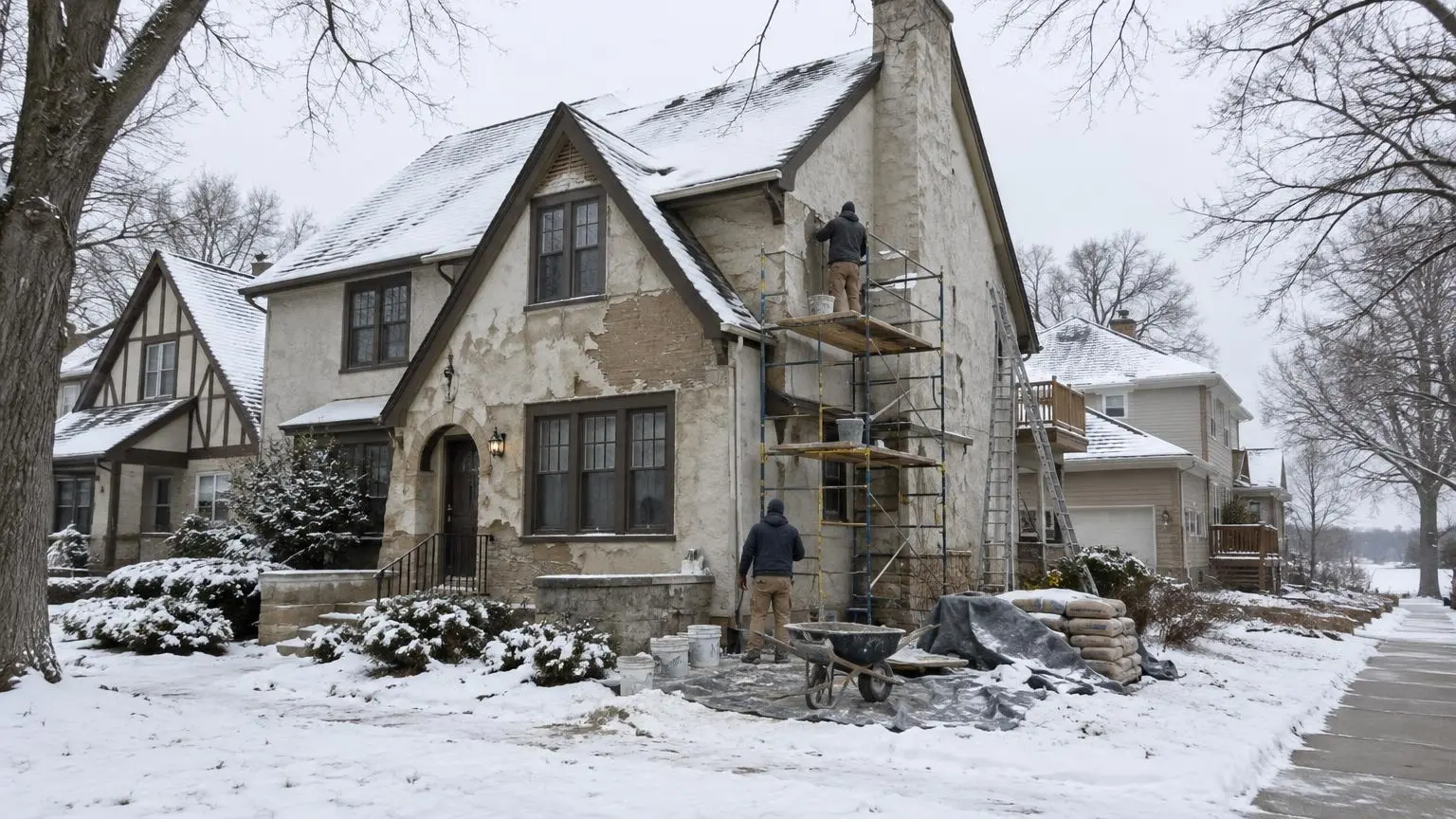
Stucco repair for Minneapolis & the Twin Cities
Stucco Repair in Minneapolis, MN
We find where water is getting in, fix that first, and match the repair to the stucco you have, from 1920s lime stucco to late-1990s suburban walls.
- Free on-site estimates
- Written, itemized quotes before any work
- Cause of the damage found before patching
Stucco Repair Built Around Minnesota Weather
Stucco repair in Minneapolis has to account for two things: winter and water. January in Minneapolis averages about 16°F, the city gets around 51 inches of snow a year, and water that soaks into a cracked wall in fall can freeze, expand and widen the crack before spring. The other half of the story is age. Roughly 44% of the city's homes were built in 1939 or earlier, many with original stucco, while the suburbs around it have thousands of stucco houses built from the late 1980s onward. Those two groups fail in different ways and need different repairs.
Two kinds of stucco houses, two kinds of problems
Stucco use in the United States grew from about 1890 into the 1930s and 1940s, on bungalows, foursquares, Tudor Revival and Mediterranean-style houses, according to the National Park Service. Many Minneapolis homes from that era have thick stucco over wood lath or masonry, often with more lime in the mix than modern stucco. These walls tend to crack, lose bond in patches, and suffer from old repairs made with mixes that were too hard.
Newer homes are a different case. The City of Woodbury found moisture damage on stucco homes built from about the late 1980s through 1999, and by 2011 reported that 451 of its 670 stucco homes from that period, 67%, had failed and been repaired, on average about 10 years after construction. The city listed window leaks, missing kickout flashing, improper deck flashing and soil above the wood framing as the main causes. Local inspectors say the problem is statewide, not limited to one suburb.
Why we look for the cause first
A crack, a dark stain below a window corner, or a soft spot near the bottom of a wall usually marks where water has been getting in. If the source is a missing kickout flashing at a roof edge or a window with no head flashing, a surface patch will not stop the leak. We trace stains and cracks back to the likely source, check flashing at windows, doors, decks and roof-to-wall intersections, and make sure the bottom of the stucco sits above grade with a working weep screed.
Moisture testing before you buy, sell or recoat
The damage on newer stucco homes is often hidden: the outside can look fine while the sheathing behind it is wet or rotting. Minnesota home inspectors who test stucco use invasive probe testing, drilling small 3/16-inch holes at likely leak points such as below windows, reading the moisture in the sheathing, and sealing the holes with color-matched caulk. Infrared cameras alone are considered inconclusive for stucco. If you are buying or selling a stucco home built since the late 1980s, or planning to recoat one, testing first tells you whether you are dealing with a cosmetic job or a wall that has to be opened.
Permits and historic homes
Minnesota requires a building permit to re-side an existing house, and the state's guidance says rotted sheathing or framing found during removal must be replaced, the city contacted about inspecting those repairs, and the water-resistive barrier and flashing inspected before the new wall covering goes on. Minneapolis requires building permits when alterations are made to exterior walls. Small patches are usually a different matter than tearing off and replacing a whole wall, and we confirm with the city what applies to your project. Minneapolis also has more than 150 local landmarks and twelve local historic districts, where exterior material changes go through heritage preservation review. Limited siding repair is treated as a minor alteration with staff review, but a change of materials can need a full hearing.
What a typical stucco repair includes
- A walk-around to note cracks, stains, soft spots, past patches and flashing details
- Moisture probe readings where the age of the house or the damage calls for it
- Fixing the water source: flashing, sealant joints, grading or gutters
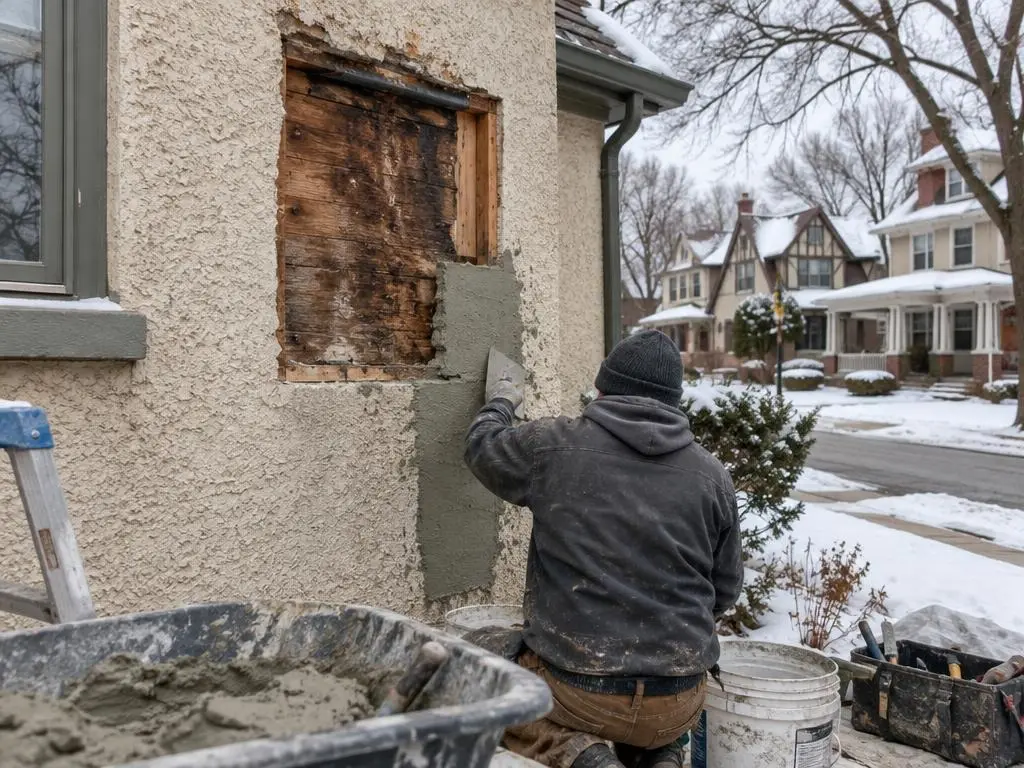
- Cutting out failed stucco to sound material with square edges
- Replacing wet or rotted sheathing and framing, with new building paper and lath
- New base coats and a finish coat matched to the texture and color of the wall
- Curing time planned around temperature, and cleanup before we leave
Where We Work
Minneapolis is home base, from 1910s and 1920s stucco bungalows and foursquares in south Minneapolis to Tudor and Mediterranean-style houses near the lakes and in Northeast. From there we work across the Twin Cities metro, including the first-ring suburbs with their own mid-century stucco and the outer suburbs where many stucco houses date from the late 1980s and 1990s, the period cities such as Woodbury have documented as most prone to moisture failures. Permit rules, inspection steps and historic review differ from city to city, and Saint Paul, for example, issues a separate stucco and plaster permit with its own lath inspection. Each area page covers what applies there, and we confirm the local rules before work starts.
- Stucco Repair in Minneapolis, MN
- Stucco Repair in Saint Paul, MN
- Stucco Repair in Edina, MN
- Stucco Repair in Bloomington, MN
- Stucco Repair in Richfield, MN
- Stucco Repair in St. Louis Park, MN
- Stucco Repair in Minnetonka, MN
- Stucco Repair in Golden Valley, MN
- Stucco Repair in Plymouth, MN
- Stucco Repair in Maple Grove, MN
- Stucco Repair in Brooklyn Park, MN
- Stucco Repair in Roseville, MN
- Stucco Repair in Eden Prairie, MN
- Stucco Repair in Woodbury, MN
- Stucco Repair in Eagan, MN
- Stucco Repair in Burnsville, MN
- Stucco Repair in Wayzata, MN
- Stucco Repair in Shoreview, MN
Why Homeowners Call Stucco Repair Minneapolis
Cause found before patching
We trace cracks and stains to flashing, grading or sealant failures and fix the source, so the patch is not just covering a leak.
Testing when the house calls for it
On stucco homes built since the late 1980s, we recommend probe moisture testing before cosmetic work or a recoat.
Mixes matched to the wall
Older lime-rich stucco gets a compatible, softer repair mix; modern portland stucco and EIFS get their own materials.
One written price
Your quote lists each area, what we found, the method and the price. Changes are agreed in writing first.
Common Questions
How much does stucco repair cost in Minneapolis?
National 2026 guides from HomeGuide and HomeAdvisor put most stucco repairs at roughly $500 to $2,700, or about $8 to $50 per square foot for typical crack and patch work. Water-damage repair that removes stucco and sheathing runs much higher, around $30 to $50 per square foot or more. Your written estimate, after we see the wall, is the price.
What is best for stucco repair?
The best repair matches the existing stucco and fixes whatever let water in. Small hairline cracks can be filled with a compatible elastomeric patch; larger cracks and damaged areas are cut out and rebuilt with base coats and a finish coat. On older lime-rich stucco, a softer mix works better than straight portland cement.
What is the fake stucco called?
Synthetic stucco is usually called EIFS, short for Exterior Insulation and Finish System. It is a thin, flexible finish over foam board rather than a thick cement coat. Minnesota home inspectors note that EIFS is uncommon on Minnesota houses, and most local stucco is traditional cement stucco. A tap on the wall usually tells them apart: EIFS sounds hollow and feels softer.
Can you apply stucco over existing stucco?
Yes, if the existing stucco is sound, clean and well bonded. A new finish coat or acrylic recoat can go over it after cracks are repaired. If the wall has hidden moisture damage, recoating only hides it, which is why we recommend moisture testing first on newer homes.
What is the typical lifespan of a stucco wall?
Well-built stucco can last many decades; plenty of Minneapolis stucco from the 1920s is still on the wall. Lifespan depends far more on flashing, drainage and maintenance than on the stucco itself. Woodbury found that many late-1980s and 1990s stucco homes needed major repair within about 10 years because water got behind the stucco.
Should I get a stucco moisture test before buying a house?
For a stucco home built since the late 1980s, many Minnesota inspectors recommend it. Probe testing reads the moisture in the sheathing through small holes at likely leak points and costs a few hundred dollars to around $1,000. The seller usually has to sign a release before holes are drilled.
Can stucco be repaired in winter in Minnesota?
Cement-based stucco should not be applied when temperatures are below about 40°F or frost is possible, according to the National Park Service. Some inspection, testing and interior-side work can happen in cold months, and emergency leaks can be protected temporarily. Most base coat and finish work is scheduled from spring through fall.
Our Stucco Repair Services
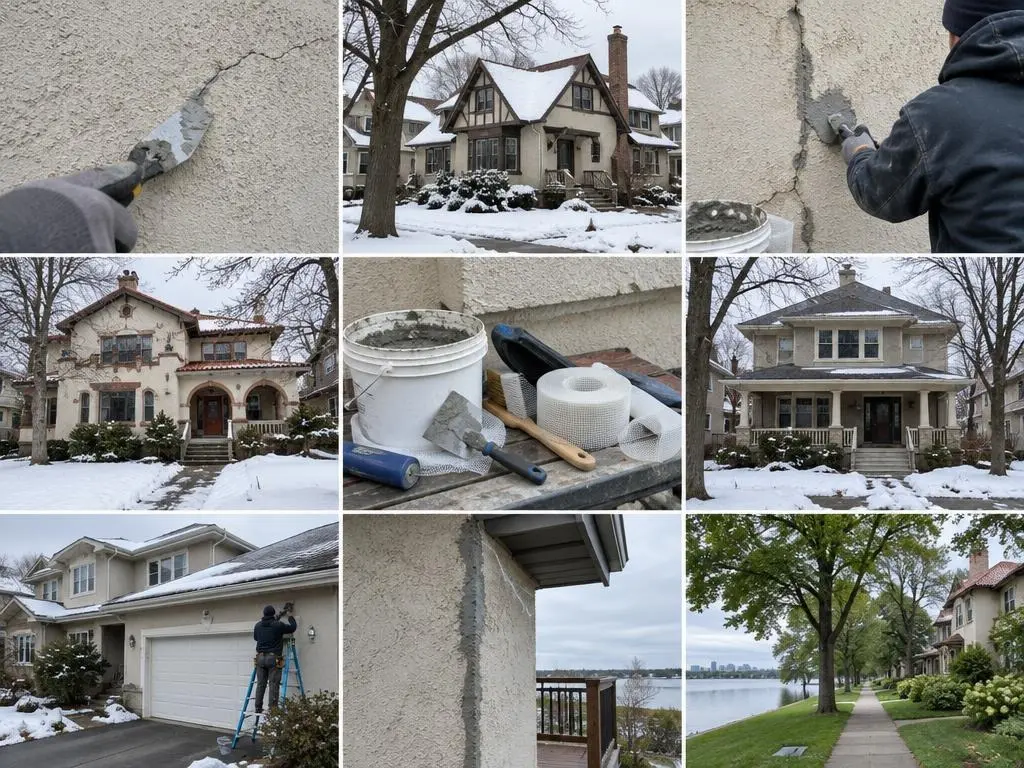
Six services cover most of what goes wrong with stucco on Twin Cities homes, from a single crack to a wall that has to be rebuilt.
Stucco Repair
Damaged, loose and water-stained stucco cut out and rebuilt, with the leak behind it fixed first.
Learn more →Stucco Crack Repair
Hairline, settlement and freeze-thaw cracks diagnosed and repaired with materials that move with the wall.
Learn more →Stucco Moisture Testing & Remediation
Probe moisture testing to find hidden water damage, and full remediation when walls have to be opened.
Learn more →Stucco Recoating & Color Coat
A fresh finish coat or acrylic recoat over sound stucco to refresh color, fill fine cracks and even out patches.
Learn more →EIFS Repair
Repairs to synthetic stucco: impact damage, cracks, woodpecker holes and moisture behind the foam.
Learn more →Historic Stucco Restoration
Repairs to early 20th-century stucco with compatible, lime-rich mixes and matched texture.
Learn more →Get a Stucco Repair Estimate
Free on-site estimates in Minneapolis and across the Twin Cities.